
Silicone route
STILOR SI 150 is a silicone defoamer candidate in development. Establish whether this chemistry route fits the downstream process.
Match the foam-control route to the process—not simply the appearance of a sample.
Discuss this application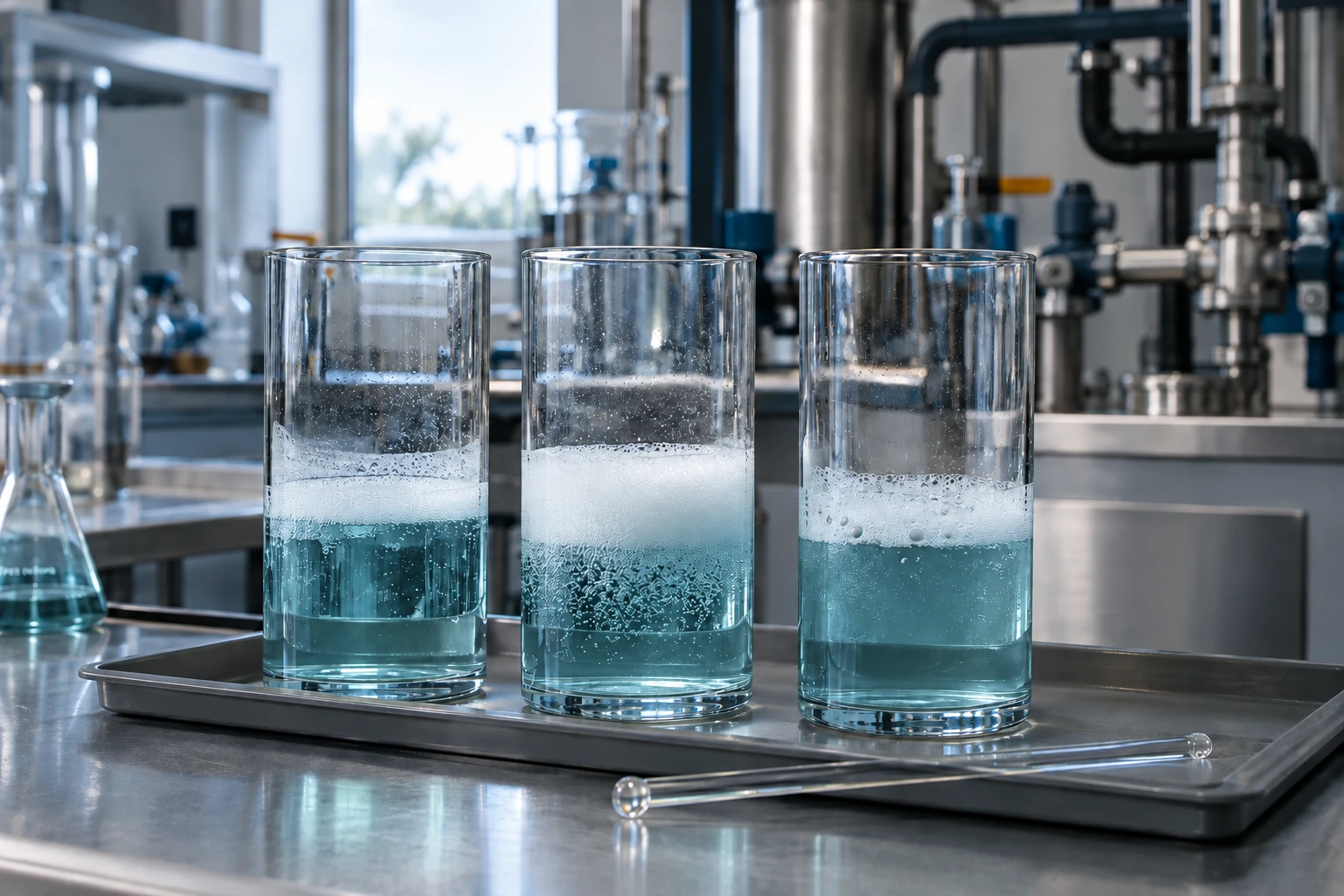 Illustrative application context
Foam can influence usable vessel capacity, handling and process stability. A candidate must be evaluated under relevant shear, liquid chemistry and downstream requirements.
Compare silicone and non-silicone routes against an agreed test method. Consider both initial foam knockdown and persistence without assuming compatibility from family name alone.
STILOR SI 150 is a silicone defoamer candidate in development. Establish whether this chemistry route fits the downstream process.
STILOR NS 160 offers a separate development route for discussion where process constraints call for a non-silicone approach.
These are evaluation objectives. They are not claims of achieved product performance.
Foam height and collapse under defined test conditions
Persistence under representative agitation
Downstream compatibility and treatment demand
Tell us about your process, your constraints and the outcome you need to evaluate.
