
Oil separation
FORVEN DM 430 is a demulsifier in development. The evaluation would focus on the oil-phase requirement and emulsion behaviour.
Define which phase needs improvement, then agree the separation endpoint.
Discuss this application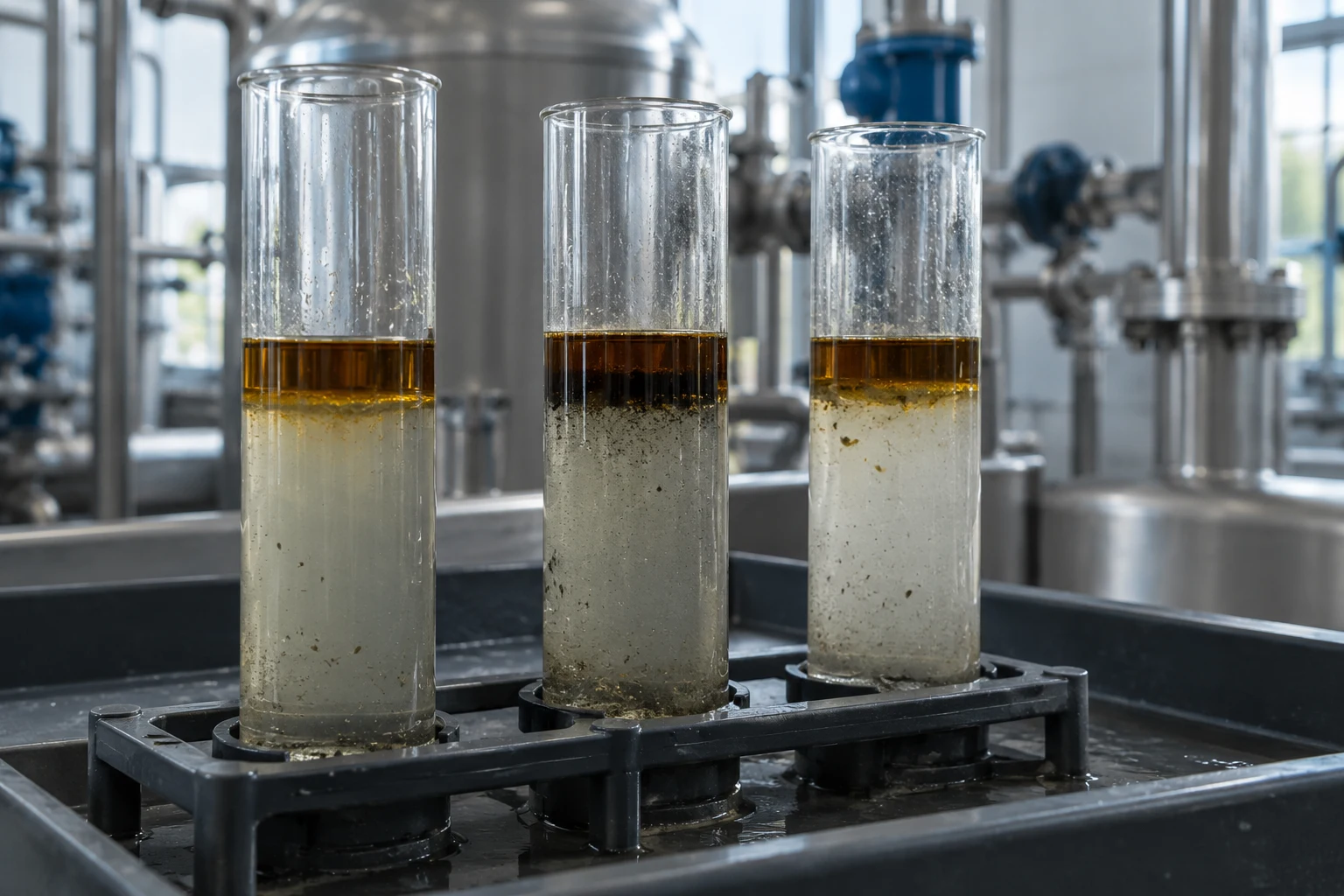 Illustrative application context
Emulsion behaviour and dispersed oil vary with fluid composition, shear and residence time. Oil dehydration and produced-water deoiling should not share an assumed success criterion.
Design representative screening around the required phase quality. Consider interfaces, separated phase volumes and downstream constraints rather than visual clarity alone.
FORVEN DM 430 is a demulsifier in development. The evaluation would focus on the oil-phase requirement and emulsion behaviour.
FORVEN DW 450 is a produced water deoiler in development. A water-phase assessment needs a defined analytical endpoint; appearance is not proof of compliance.
These are evaluation objectives. They are not claims of achieved product performance.
Oil-phase water content and interface behaviour
Residual dispersed oil using an agreed analytical method
Separation time, residuals and treatment demand
Tell us about your process, your constraints and the outcome you need to evaluate.
